Gabriele Olivari's The Silence of San Vittore immerses psychologist Matteo Calvino in a tense evaluation at Milan's infamous San Vittore Prison, unraveling a cold-case murder tied to mafia confessions, media corruption, and the harsh 41-bis regime. For readers unfamiliar with Italian locales or the country's deep-seated history of organized crime and judicial struggles, the novel might feel like a shadowy foreign labyrinth. But Olivari masterfully weaves fiction with facts, drawing from real prisons, trials, and scandals to critique themes of truth, redemption, and power. This guide breaks down the key themes, places, and historical inspirations, helping you navigate the story's authenticity and appreciate its noir depth—whether you're here for the thriller or to uncover Italy's complex past.

Key Themes: Confessions, Corruption, and the Human Cost of Justice
The novel explores Calvino's ethical tightrope as he evaluates mafia inmates under the 41-bis regime, probing confessions amid personal and systemic pressures. Core themes include:
- Truth vs. Manipulation in Confessions: Calvino dissects genuine remorse from strategic lies, reflecting the psychological complexity of "pentiti" (repentant mafiosi) who trade testimony for leniency.
- Institutional and Media Corruption: Olivari depicts prisons and media as tools of power, hiding murders and scandals, critiquing how elites evade justice.
- Redemption and Personal Sacrifice: Calvino's journey, haunted by family strains and past cases, underscores the toll of pursuing truth—PTSD, isolation, and moral ambiguity—in a flawed system.
These aren't mere plot devices; they're echoed in Italy's real battles against mafia influence, making the book a meditation on imperfect justice.
Iconic Places: From Milan's Bustle to Prison Shadows
Gabriele Olivari contrasts urban vitality with carceral dread, using settings to heighten tension. For non-Italians, here's context:
- Milan: Italy's northern economic hub, the story opens amid its awakening streets—trams, bakeries, and grey buildings evoking a gritty, industrious vibe. Milan blends historic architecture (19th-century facades, wrought-iron balconies) with modern hustle, symbolizing Calvino's "normal" life before prison dives. It's a fashion and finance capital, but the novel highlights its underbelly near San Vittore.

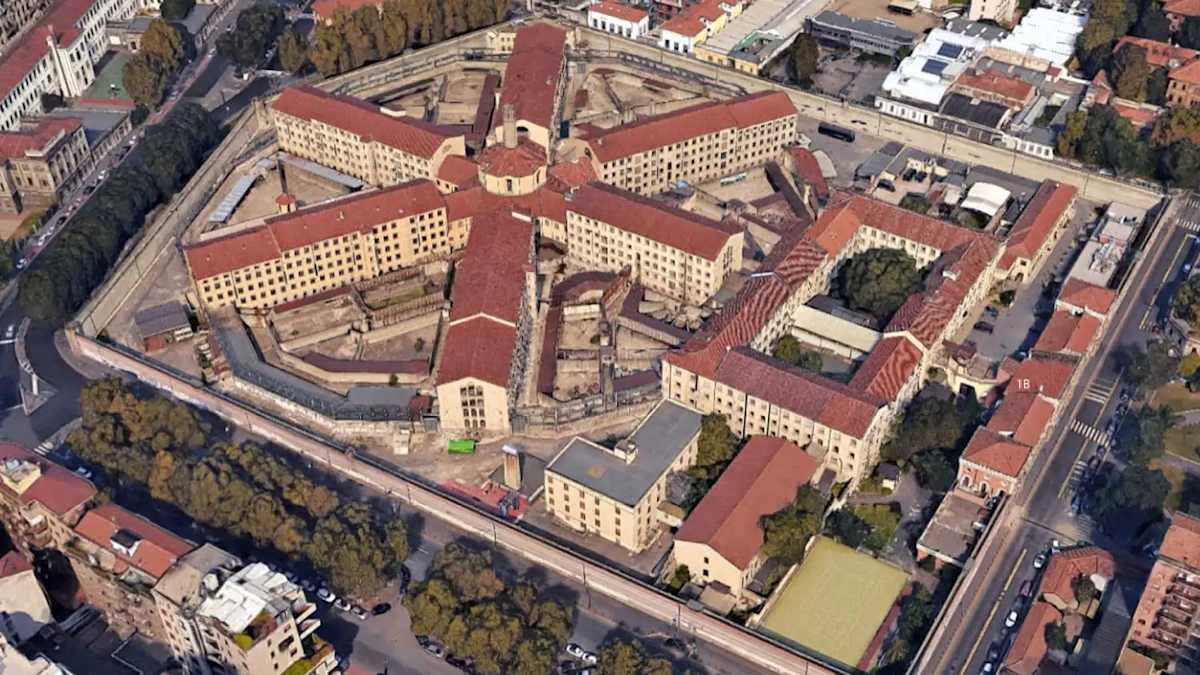
- San Vittore Prison: This Victorian-era fortress in central Milan dominates the narrative, a red-brick star-shaped behemoth with narrow slit windows and iron gates. Built in 1879, it's embedded in residential areas, shaping local life—guards at nearby bars, families with visitation bags. It represents isolation amid urban density, far from Milan's glamorous Duomo or fashion districts.

The Real Facts: Scandals and Histories That Shape the Story
Olivari fictionalizes a mafia-media murder plot but grounds it in Italy's mafia trials, prison regimes, and corruption exposés. This background adds layers to Calvino's world:
- San Vittore Prison's History and Scandals: Constructed in 1872 and opened in 1879, San Vittore holds up to 600 inmates but often exceeds capacity (e.g., 1,036 in 2017). During WWII, it detained Jews and political opponents before deportation to camps. Post-war, it housed mafiosi and terrorists; scandals include 2003 complaints of poor conditions (no alarms, few cameras) and 2024 violence over overcrowding. High-profile inmates like Parmalat's Calisto Tanzi (2004 fraud scandal) and football ultras (2025 mafia-linked sentences) inspire the novel's grim atmosphere and corruption probes.
- The 41-bis Regime: Italy's Harsh Isolation System: Introduced in 1992 after mafia bombings (e.g., judges Falcone/Borsellino murders), 41-bis ("hard prison") isolates dangerous inmates to prevent external orders. It suspends rights like family visits, leading to controversies over human rights violations (e.g., ECHR rulings against Italy). Anarchist Alfredo Cospito's 2023 hunger strike protested its brutality, sparking national debate. Calvino's evaluations echo criticisms of its psychological toll.
- Pentiti System and Famous Mafia Cases: Pentiti (repentants) like the novel's inmates trade confessions for protection, breaking omertà (silence code). Tommaso Buscetta, the first major pentito (1980s), exposed Cosa Nostra in the Maxi Trial (1986-1992, 475 defendants, 342 convicted). Cases like Calabria's 2021 mega-trial (355 defendants) and women like Maria Concetta Cacciola (2011 suicide after testifying) highlight risks. Olivari uses this for Calvino's truth-seeking amid motives.
- Media Corruption Scandals: The book's media-mogul plot draws from Silvio Berlusconi's controversies—tax fraud, bribery, and media empire (Mediaset) influence. Mani Pulite (1990s "Clean Hands") exposed widespread bribes, including media figures. Scandals like 2000 Cusani trial (televised corruption hearings) and Berlusconi's 2012 fraud conviction mirror the novel's elite evasion and press freedom erosion.
These inspirations reveal Olivari's fusion of fact and fiction: a tale where prisons and confessions expose enduring corruption. With this, The Silence of San Vittore resonates deeper—dive in and hear Italy's silenced voices.
Happy reading,
Thriller Enthusiast & Calvino Series Fan